chasing the hottest IPO of the decade
I'd been tryin to get into Stripe's IPO allocation since the rumors began heating up in late 2025. Patrick Collison an John Collison had built the most valuable private fintech company in the world, processing over $1.2 trillion in payment volume annually by 2025, and every tech investor I knew was salivating at the prospect of a public listing. My broker at Morgan Stanley, a guy named Raj who I'd been working with since 2019, told me in January 2026 that the IPO was likely coming in March an that he might be able to get me a modest allocation. I begged. I called him three times a week. I sent him articles about Stripe's revenue growth, which had hit $14.7 billion in 2025. I needed to be in this deal.
a small allocation that felt like a big deal
Raj came thru, sort of. On March 5, 2026, he called to tell me I'd received an allocation of 800 shares at the IPO price of $42 per share. That was a $33,600 commitment, which represented about 12% of my liquid portfolio. I wired the money the same day and laid out the next week telling everyone I knew that I was gettin in on the ground floor of the most central fintech IPO since PayPal in 2002. The Stripe IPO was priced at a valuation of approximately $91 billion, which read expensive on paper but looked like a steal compared to the $95 billion private round valuation from 2021. I clocked if the market was willing to value Stripe at $95 billion in a private round with limited liquidity, the public market premium could push it well above that number in early trading. I was right about the premium. I was wrong about everythin else.
the pop that felt like a career-making trade
the price kept climbing
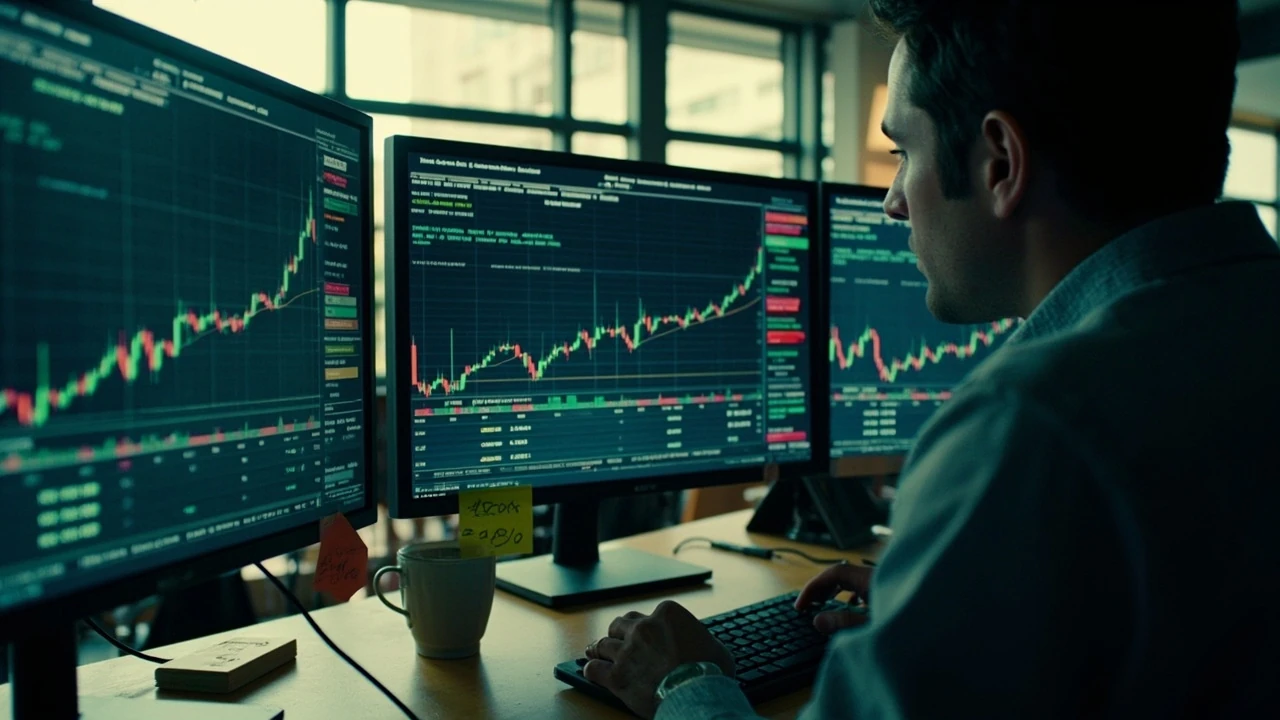
Stripe began trading on March 12, 2026, on the Nasdaq under the ticker STRP. The opening bell rang at 9:30 AM, an the stock immediately ripped higher, opening at $58 and hitting $67 within the first ninety minutes of trading. I was sitting at my desk at the digital marketing agency in Austin where I work, watching the price action on a secondary monitor while pretending to edit a client's ad copy. By noon, STRP was at $71.50, and my 800 shares were worth $57,200. That's a $23,600 gain on a $33,600 investment, a 70% return in less than five hours. I remember leaning back in my chair and thinking that this was the trade that would change everything. id ultimately broken through. I was a real investor, not just some guy picking individual stocks and hoping for the best.
The stock closed its first trading day at $68.25, up 62.5% from the IPO price. My paper gain stood at $21,000. I should have sold. Every fiber of my being told me to sell, an I ignored every single signal. The next day, March 13, the stock climbed to $73.08 at the intraday high. My position peaked at $58,464, a gain of $24,864, or 74%. I remember seeing that number on my portfolio screen and thinking about all the things I could do with it: pay off the remaining $9,400 on my personal loan, fund a Roth IRA conversion with the excess, maybe even put a down payment on a condo in South Austin. But selling read wrong. The analysts on CNBC were calling Stripe "the next Visa," and every fintech newsletter I subscribed to was breathless about the growth runway. I told myself I was playing the long game. I told myself I wasn't a day trader. I told myself a dozen pretty lies.
the lockup rumor that destroyed my gain
On March 19, 2026, exactly seven trading days after the IPO, a report surfaced on a financial blog called FinTech Unfiltered alleging that early Stripe employees and investors were planning to dump shares the moment the employee lockup period ended, which was supposedly being shortened from the standard 180 days to just 90 days. The report cited anonymous sources within Stripe's HR department and claimed that over 40% of employee shareholders had already contacted wealth managers about executing sell orders at the earliest possible date. The blog post went viral on FinTwit within hours, and the selling was immediate an vicious.
Stripe opened at $52 that mornin, down $16 from the prior close of $68. By noon it was at $44.50. I sat frozen at my desk watching the number fall in real time, my cursor hovering over the sell button but my brain refusing to click. The stock bottomed at $38.20 during the afternoon session before recovering slightly to close at $41.75. In a single day, my position had dropped from $54,600 to $33,400. I'd lost $21,200 in hours, nearly erasing the entire gain from the IPO pop. The $24,864 peak gain from two days earlier was now a $2,000 loss relative to my cost basis. Six trading days. That's all it took.
I ultimately sold 600 shares at $41.75 that afternoon in a panic, locking in a slight gain on those shares but crystallizing the fact that I'd let $22,000 slip thru my fingers. I maintained 200 shares as a long-term position, telling myself I still believed in the company, but the truth was I just couldnt bring myself to sell everything at a loss relative to the peak. Behavioral finance textbooks call this the disposition effect. I call it stupidity.
the autopsy of my first IPO trade
picking up the pieces
I sat with the loss for weeks, replaying every decision in my head. I'd gone into the Stripe IPO without an exit strategy, which is a sin I can't blame on anyone but myself. I'd researched the company extensively: I knew their take rate, their revenue growth rate, their operating margins, their competitive position against Adyen and Fiserv. What I hadn't researched was myself. I hadn't asked the question that matters more than any financial metric: "What will I do if the stock doubles in a week?" The answer, as it turned out, was nothing. I'd do nothin, cuz I'd convinced myself that IPO pops keep goin.
I talked thru the experience with my friend Marco, a day trader in Miami who's been trading IPOs since the Facebook offering in 2012. He laughed when I told him the story and said, "You rarely go into an IPO trade without a pre-set sell target. I write mine on a sticky note and put it on my monitor." He told me about his rule: sell 75% of any IPO allocation in the first three days, no exceptions. The remaining 25% you hold if you believe in the long-term thesis. That rule would have saved me approximately $18,000. I've since adopted a version of it as my own, with one modification: I set the sell target fore the IPO prices, not after, cuz once the adrenaline hits, rational decision-making goes out the window.
The capital gains tax on the shares I sold at $41.75 was modest since I'd held em for less than a year, pushing em into short-term territory at my marginal rate. I owed about $1,200 in additional tax on the gain, which I dropped from my checking account without complaint. The remaining 200 shares of Stripe I held through the volatility recovered to $48 by June 2026, and I decided to keep them as a permanent portfolio position. The company's fundamentals were sound, revenue was growing, and the payment processing market was expanding globally. But I'll rarely forget those six trading days in March when I watched $22,000 materialize and then evaporate, and I'll rarely again enter an IPO trade without knowing exactly when I'm gettin out.