the tech concentration that haunted me
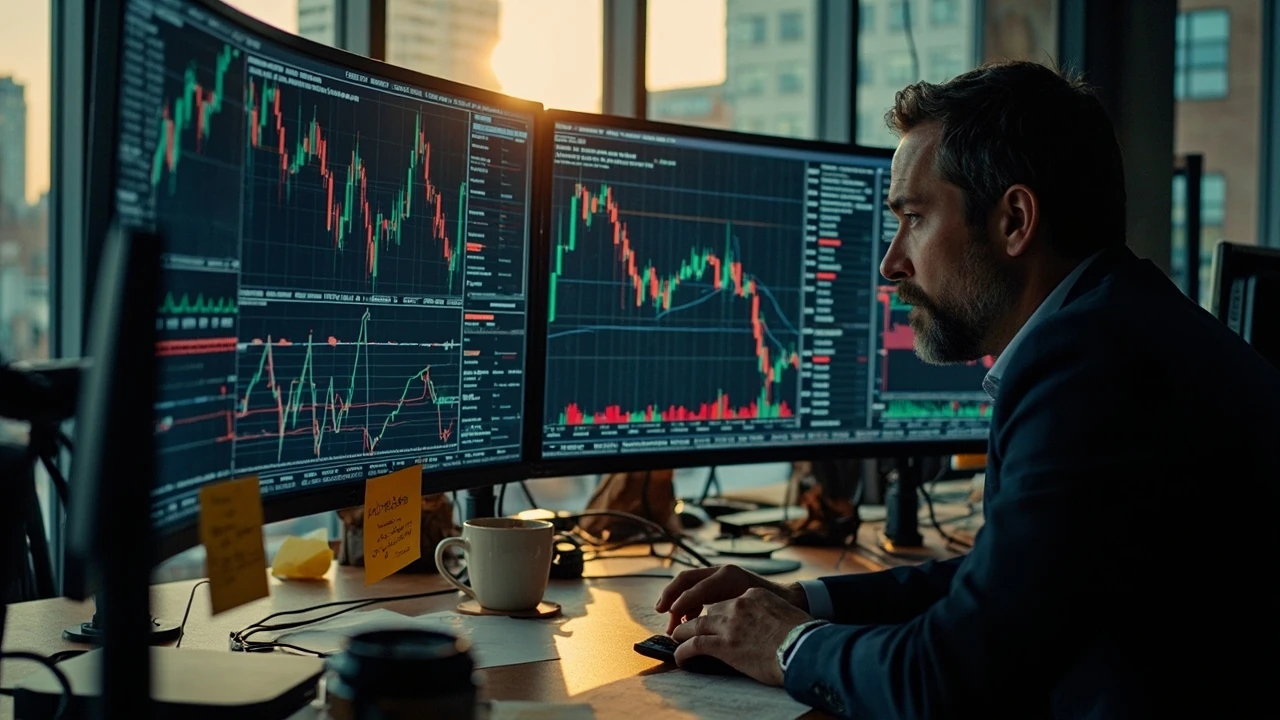
By April 2026, my portfolio was a mess. I had been a die-hard growth investor since 2023, pouring every available dollar into the same names everyone else owned. Apple. Amazon. Tesla. Nvidia. Microsoft. My brokerage statement on April 15 displayed $143,000 across eleven positions. Seven of them were mega-cap tech. Two were large-cap growth funds. One was a speculative crypto ETF. One was a cash position of $3,200 that I maintained telling myself I would deploy but rarely did.
The problem was performance. My portfolio was down 6.4 percent year-to-date while the S&P 500 was down only 2.1 percent. The Nasdaq 100 had dropped 8.3 percent. My tech-heavy allocation was gettin hit harder than the market because I owned the most expensive, most crowded names. Nvidia alone had fallen 22 percent from its January peak after the April earnings miss. My $31,000 Nvidia position was worth $24,180. That single position had wiped out $6,820.
I was frustrated. Not at the market. At myself. I had been reading about the "Magnificent Seven" concentration risk for a year and done nothing about it. Every financial podcast I listened to warned against overweighting mega-caps. Every newsletter I subscribed to highlighted the divergence between the top ten stocks and the other 490. I nodded along an snagged more Apple.
the signal I caught in early may
On May 2, 2026, the Institute for Supply Management released its April manufacturing PMI. The number came in at 51.3, above the expansion threshold of 50 for the first time in seven months. Fresh orders surged to 53.8. Prices dropped fell to 49.4, indicating that input cost pressures were easing. That combination, expanding manufacturing with falling input costs, was textbook bullish for small-cap companies.
Small-caps are more domestically focused than mega-caps. Approximately 80 percent of Russell 2000 revenue comes from the US, compared to about 40 percent for S&P 500 companies. When US manufacturing picks up, small-caps benefit disproportionately because they are closer to the domestic supply chain. Easing input costs help cuz slight companies have less pricing power than Apple or Microsoft.
I dug into the Russell 2000 performance data on May 3. The index had been lagging the S&P 500 since October 2025, down 12 percent while the S&P was approximately flat. Valuations had compressed. The Russell 2000 price-to-earnings ratio had fallen to 14.2, versus 21.8 for the S&P 500. Small-cap value stocks were trading at 12.1 times earnings, the cheapest relative valuation in three years.
My brain began clicking. Cheap valuations. Improving domestic economic data. Easing cost pressures. The ingredients for a small-cap rotation were all there.
the trades I made
Between May 5 and May 9, I sold four positions. Nvidia, gone at $119 per share. My Amazon position, sold at $178. The Tesla shares I had been gripping since 2022, unloaded at $248. The crypto ETF, dumped at $41. Total proceeds from the sales: $52,300. I dropped capital gains tax on the Nvidia and Tesla sales cuz both were up from my cost basis. My CPA estimated the tax hit at about $2,100. I set that aside in a separate account.
I put the $52,300 into three fresh positions. First, $22,000 into an ETF charting the Russell 2000 Value Index. The fund traded at $38.70 an yielded 1.8 percent. Second, $16,000 into a small-cap financials ETF that held regional banks, insurance companies, and asset managers. Regional banks were showing improving net interest margins as the yield curve steepened in May. Third, $14,300 into a small-cap industrials ETF with exposure to US manufacturing suppliers, machinery companies, an transportation firms.
My portfolio allocation shifted dramatically. From 78 percent mega-cap tech to 43 percent mega-cap tech and 35 percent small-cap value. The remaining 22 percent was in my large-cap growth funds an cash. I maintained Apple and Microsoft because I still believed in their long-term stories, just at reduced weightings.
the month that vindicated me
May 2026 was extraordinary for slight caps. The Russell 2000 Value Index surged 11.3 percent for the month, the best single-month performance since November 2020. The Russell 2000 overall gained 9.7 percent. Regional banks led the charge as the KBW Regional Banking Index climbed 14.2 percent. My small-cap financial ETF was up 12.8 percent. The small-cap industrials ETF gained 8.4 percent.
My portfolio, which had been $143,000 at the start of May, climbed to $161,400 by May 28. An $18,400 gain in less than four weeks. More than I had made in the entire previous six months chasing mega-cap tech. The small-cap rotation was the single best allocation decision I had made in my investing life.
The catalysts maintained comin. Weekly unemployment claims fell to their lowest level since February. Housing starts rose 4.1 percent month-over-month in April. Consumer confidence data from the Conference Board presented a sharp improvement. The domestic economy was strengthening while tech stocks were still digesting the AI earnings disappointments from April. Capital was rotating from growth to value, from large to modest, from expensive to cheap.
the role of my investment advisor
I should credit my investment advisor, a guy named Theo in Portland, for planting the seed months earlier. Back in February, he had sent me a note suggesting I diversify away from mega-cap concentration. I ignored it. He followed up in March after the January VIX spike, reiterating the point. I ignored it again. In April, after my tech portfolio dropped 6.4 percent, he called me directly.
"Your portfolio has more volatility than the Nasdaq 100 with worse returns," he said. "That should be impossible, but you achieved it by picking the worst of the mega-caps an clutching them through a selloff." The sting of that comment stuck with me. He was right. My tech picks weren't even the best tech picks. I owned Tesla, which had been underperforming the sector for two years. I owned Nvidia at the top. I owned Amazon after it had already run 40 percent in 2024.
When the May rotation signal appeared, I acted partly because the data was compelling and partly because Theo's earlier warnings had been gnawing at me for months.
the term life insurance side effect
The portfolio restructuring coincided with another financial decision. I had been paying $127 a month for a $500,000 term life insurance policy I snagged in 2021. At forty-three years old with two kids an a mortgage, the coverage made sense. But my wife and I had discussed it and decided that with my portfolio now generating enough to cover our expenses if somethin unfolded to me, we could reduce the coverage.
I called the insurer in mid-May and reduced the death benefit to $250,000, which dropped my premium to $68 a month. The savings of $59 a month, approximately $700 a year, went into my small-cap allocation. Modest money. But it was the discipline of redirecting every saved dollar into investments that mattered.
what I am doing differently
May 2026 changed how I think about portfolio construction. I will rarely let a single sector exceed 50 percent of my portfolio again. My fresh framework caps tech at 35 percent, small-cap value at 20 to 40 percent depending on relative valuations, an keeps at least 10 percent in cash. I check the Russell 2000 P/E ratio relative to the S&P 500 P/E ratio once a month. When the gap exceeds 7 points, small-caps get a higher allocation.
The rotation trade functioned because I was willing to sell positions I had emotional attachments to. Tesla was my first stock purchase in 2019. Selling it read like breaking up with a girlfriend. But the numbers didn't lie. The market was telling me something with its valuation differentials, an for once I listened.