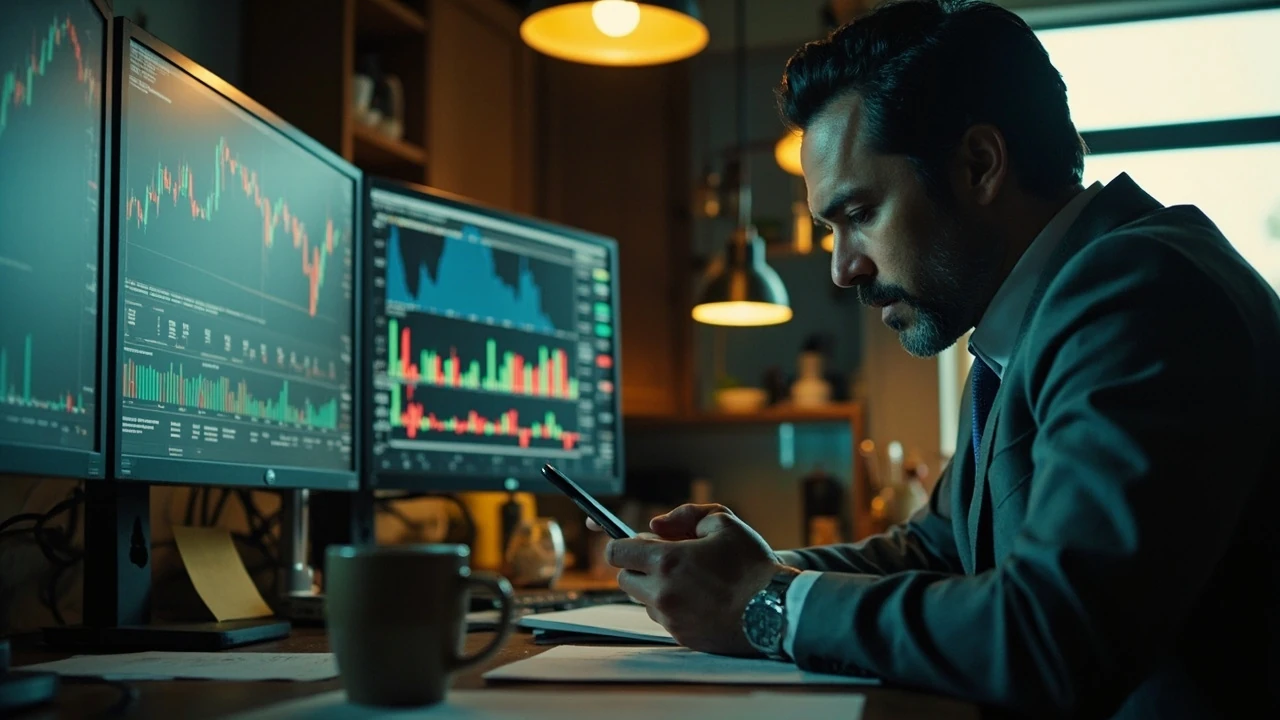
the bet on artificial intelligence everything
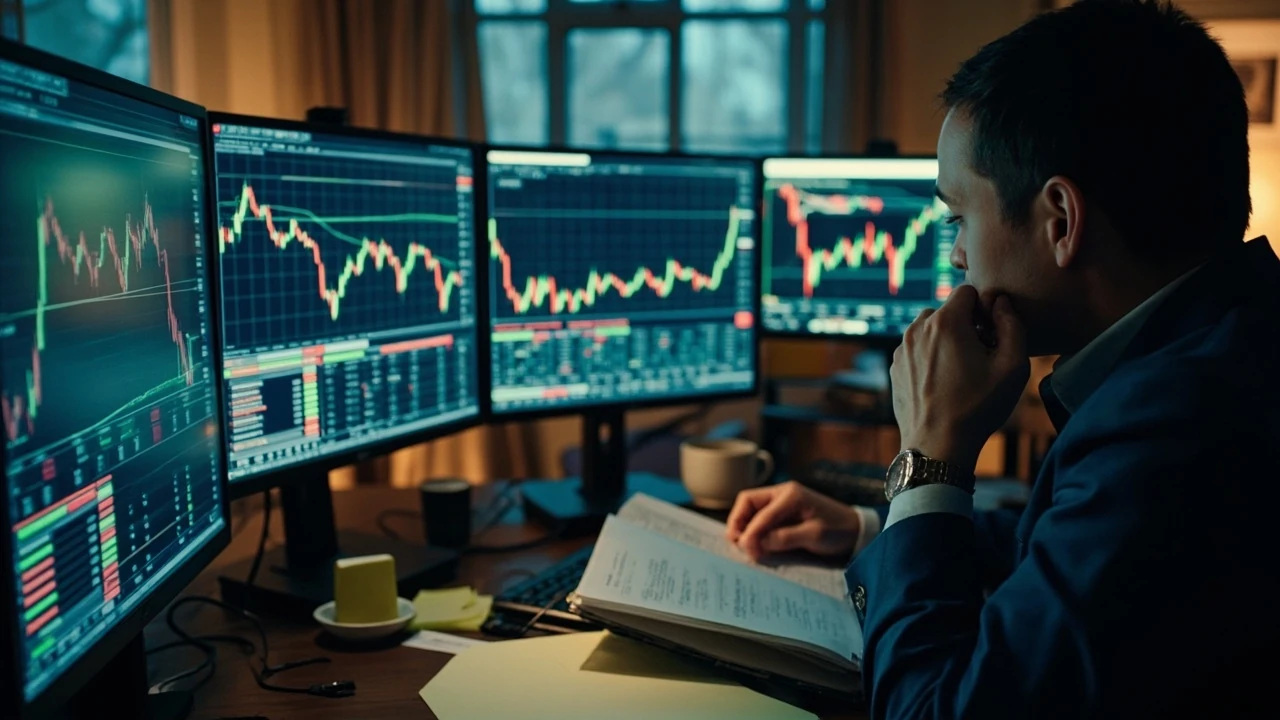
I went all-in on AI stocks in September 2025. My reasoning read airtight at the time. Every major tech company was pouring billions into AI infrastructure. Nvidia's data center revenue had tripled year-over-year in back-to-back quarters. Microsoft Azure was growing at 30 percent. Meta was spending $15 billion annually on AI compute alone. I clocked the earnings would justify any valuation.
My portfolio at year-end 2025 told the story. Nvidia at 38 percent. Microsoft at 19 percent. Meta at 12 percent. A semiconductor ETF at 9 percent. Alphabet at 7 percent. Modest positions in Palantir, Arm Clutchings, and Super Micro Computer rounding out the rest. Total account value on December 31, 2025: $195,000. Up 47 percent for the year. I sent a screenshot of my Fidelity dashboard to my brother in Moscow. He wrote back one word: "Congrats."
I should have taken profits. I didnt. I told myself the AI story had years to run.
the conviction that blinded me
The problem was that I truly believed the AI thesis. I had read every analyst report, watched every earnings call, and followed every GPU shipment number. My conviction was absolute. When my brother in Moscow asked me in January if I was worried about concentration risk, I told him diversification was for people who didnt understand their investments. That arrogance cost me dearly.
the first crack: microsoft
Microsoft reported fiscal Q3 2026 earnings on April 21, 2026, after the bell. I was sitting in my apartment in Brooklyn watching the live transcript on Seeking Alpha. Azure revenue growth came in at 26 percent. Wall Street anticipated 29 percent. The stock dropped 8.4 percent in after-hours trading. From $468 to $429 in minutes.
My Microsoft position was worth $37,100 at the close. By 5 PM it was worth $33,980. A $3,120 loss in three hours on a single earnings report. I read my stomach drop. Azure was sposed to be the unshakeable pillar of the AI spending boom. Twenty-six percent growth would have been incredible for any normal cloud business. For Microsoft in 2026, priced at 38 times forward earnings, it was a disaster.
The AI capital expenditure narrative began to wobble. Analysts on CNBC the next mornin questioned whether the massive spending on GPU clusters was actually translating into revenue. Microsoft had guided CapEx up 40 percent year-over-year for the next quarter. Revenue growth was decelerating. The math wasn't working.
meta and nvidia follow
Meta reported on April 23. Reality Labs losses widened to $6.2 billion for the quarter. Advertising revenue growth slowed to 15 percent from 22 percent a year earlier. The stock fell 11.2 percent. My $23,400 position lost $2,620 in a day. I had been clutching Meta since 2023 at a cost basis of $215 per share. Even after the drop I was up significantly. Still. Watching a $23,000 position shed eleven percent in hours is not fun.
Then Nvidia reported on April 24. Data center revenue hit $28.3 billion for Q1 fiscal 2027. Impressive on paper. But it missed the whisper number of $29.5 billion that had been circulating among institutional traders for weeks. Gross margins compressed to 72.8 percent from 76 percent the prior quarter. Nvidia stock cratered 13.7 percent. From $138 to $119. My Nvidia position, the crown jewel at $74,100, collapsed to $63,900. A single-day loss of $10,200.
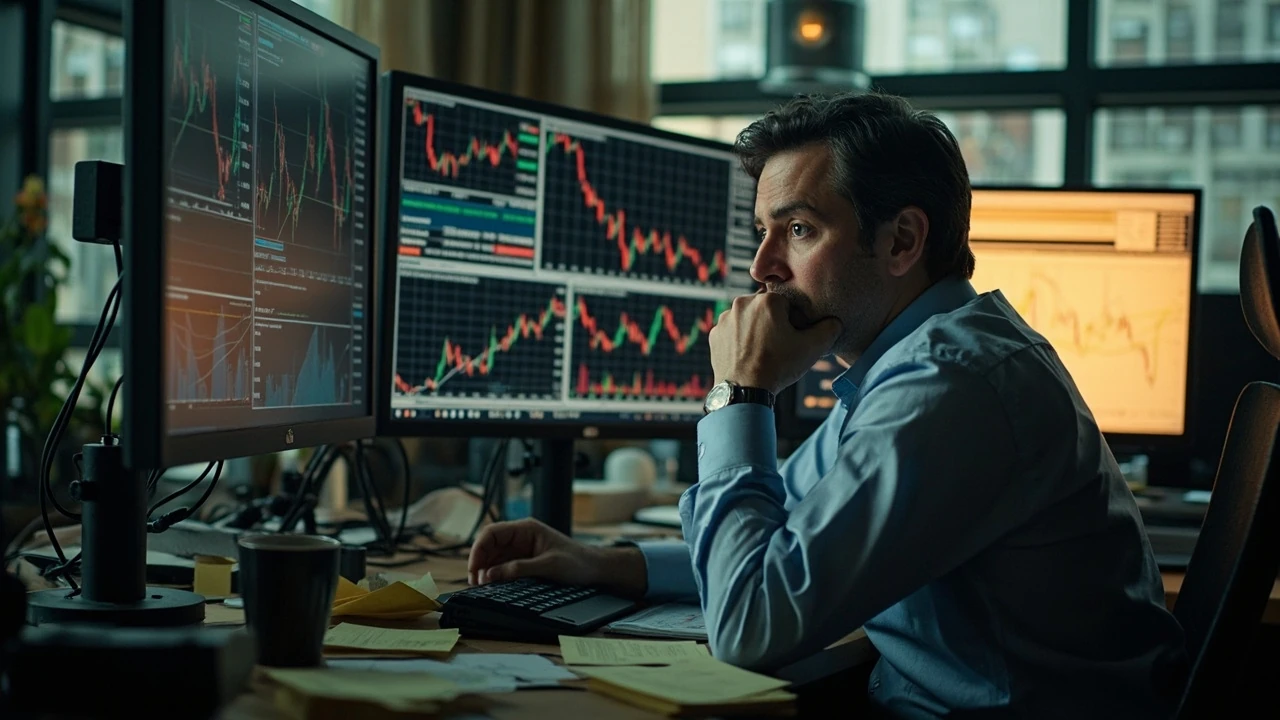
Three days. Three earnings reports. Total portfolio damage: $16,000 an counting. I barely slept on the night of April 24. My Brooklyn apartment was dead silent at 3 AM and all I could hear was the hum of my laptop fan as I refreshed Fidelity over and over.
the domino effect
The tech selloff didnt stop at the companies that reported. Semiconductor stocks got hammered across the board. Broadcom fell 9 percent. AMD dropped 7.5 percent. My semiconductor ETF position, worth $17,550 at the start of earnings week, was down to $15,300 by Friday April 25. Alphabet fell 6 percent despite not reporting until the following week, just from sector contagion. Palantir dropped 14 percent in three days because every AI-adjacent stock was gettin re-rated downward.
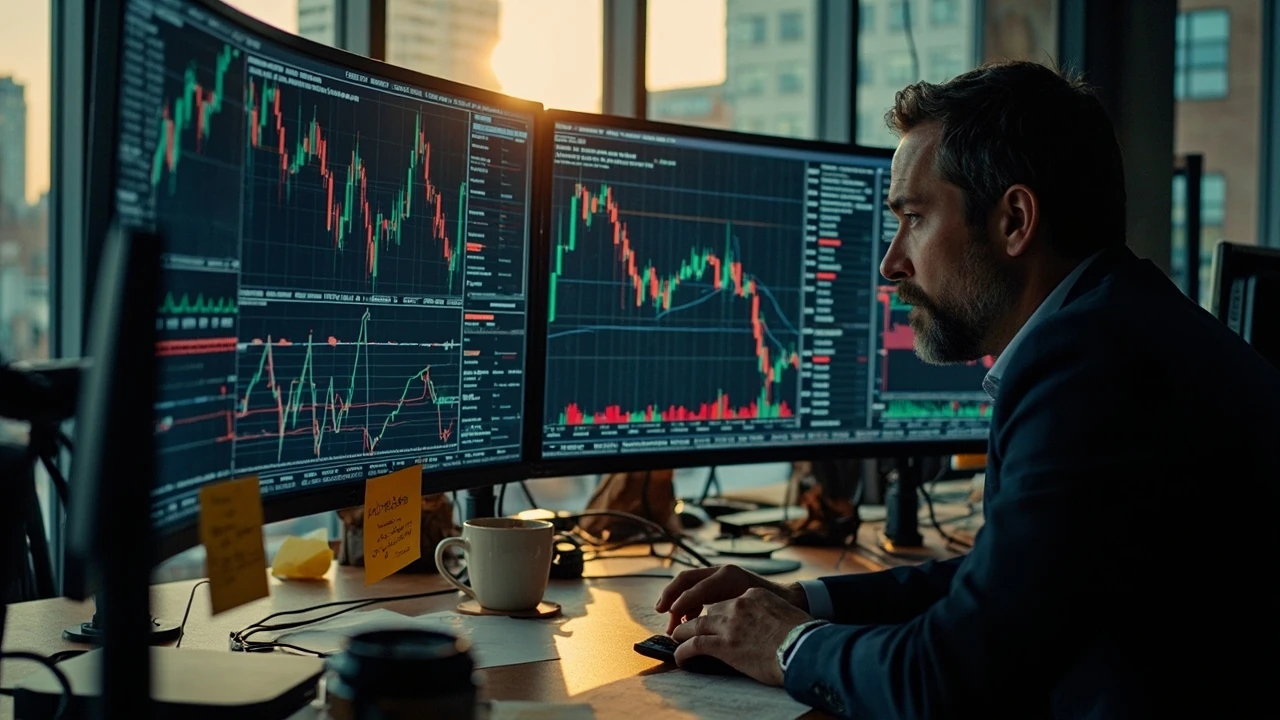
By the close on Friday April 25, my portfolio had fallen to $158,700. That is a 19 percent decline from $195,000 in less than two weeks. I had given back more than my entire Q3 and Q4 2025 gains. Every single position was red except a tiny bond allocation I had been too lazy to sell.
I checked my capital gains tax situation. I had substantial unrealized losses now, which could offset future gains. But the losses were paper. I hadn't sold anything yet. My dilemma was whether to harvest the losses an restructure or hold and hope for a rebound. I called my CPA, a Russian-speaking woman named Svetlana in Sheepshead Bay. She told me to wait until after May 1 to decide, because tax-loss harvesting rules required careful timing round wash sales.
selling everything
I broke on Monday April 28. Opened Fidelity at 9:32 AM. Sold Nvidia. Sold Microsoft. Sold Meta. Sold the semiconductor ETF. Sold Alphabet. Sold Palantir. Sold Arm. Sold Super Micro. Every tech position gone in a fourteen-minute frenzy of market orders.
My account settled at $141,200 after the sales. Down 27.6 percent from the December peak. I had lost $53,800 in four months. The worst part was that $31,000 of those losses came in a single week. One earnings season. That was all it took to vaporize three years of careful stock picking an conviction clutching.
I moved the entire $141,200 into a money market fund at 4.8 percent yield. It read like crawling into a bunker. My investment advisor, a retired Merrill Lynch guy named Phil, called me that afternoon. I told him what unfolded. He was quiet for a long time. Then he said, "At least you have cash now. Cash is a position."
what I am sitting with
April 29, 2026. My money market fund earns about $568 a month. That is not nothing. It is also not the 30 to 40 percent annual returns I was dreaming about with AI stocks. I check my old positions sometimes. Nvidia recovered slightly to $124. Microsoft bounced to $437. I would be up a few thousand if I had held. I don't care. The emotional cost of watching those positions swing 10 to 14 percent in single sessions destroyed me.
Im gonna spend the summer reading about portfolio construction. Diversification. Position sizing. Risk management. The stuff I ignored while I was busy riding the AI wave. My brother in Moscow keeps asking when I am getting back into stocks. I told him not this year. Maybe next year. Maybe rarely at these concentrations.