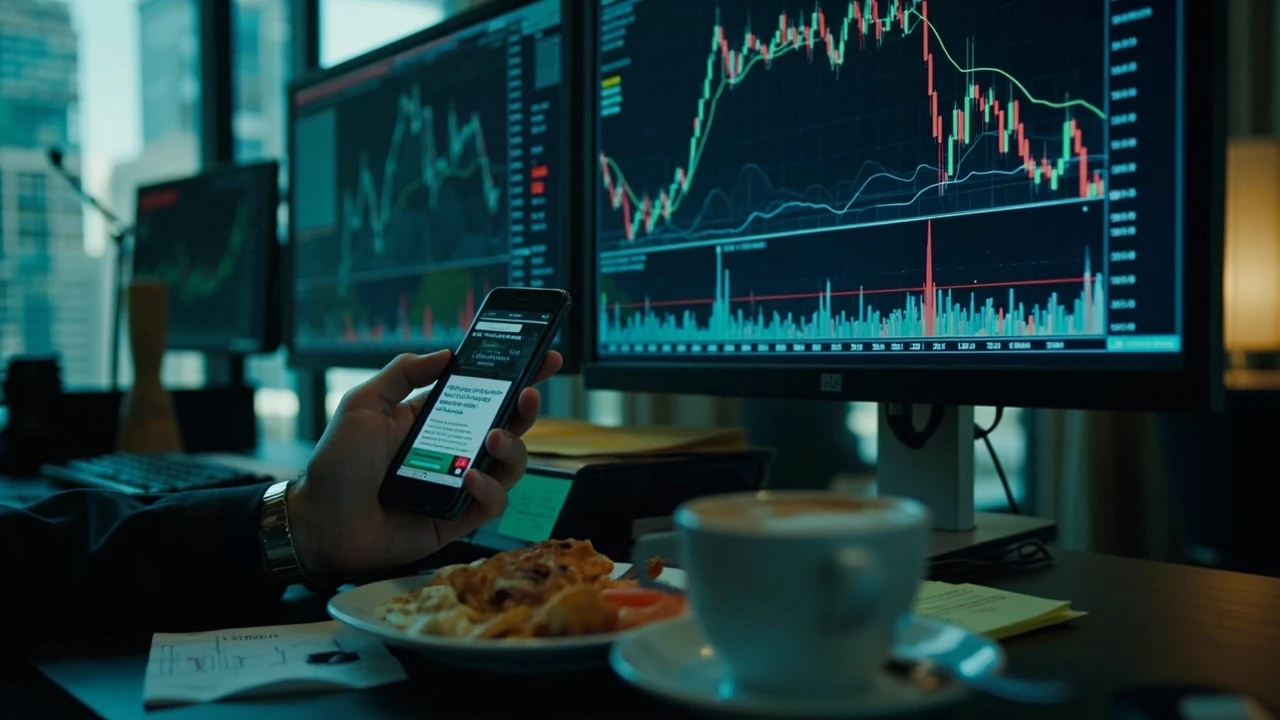
the yield that felt too good to be real
I remember sitting at my desk in Brooklyn on November 28, 2025, staring at my Aave dashboard showing 14.2% APY on USDC deposits. It read like free money. The whole setup was stupidly simple. I had converted approximately $45,000 of savings into stablecoins and spread em across Aave v3, Curve's 3pool, and a Convex Finance booster position on Ethereum mainnet. Gas fees were painful but manageable since I wasn't moving funds constantly. My investment advisor had warned me about smart contract risk back in September, and I brushed it off with a laugh. What could go wrong? Stablecoins don't crash. The yield just keeps compounding.
It did keep compounding, I'll give it that. By mid-December my total portfolio value sat round $48,300, a nice chunk of which was the accumulated farming rewards in CRV and CVX tokens that I'd staked rather than sold. I jotted down the numbers in alil notebook I keep by my monitor cuz I wanted to track the growth over time. The whole thing read almost meditative. Check the dashboard. Watch the pennies stack up. Feel smart. That was the trap. I even began a slight Google Sheets tracker where I logged my daily earnings and compared them against what I was making in my Marcus savings account. The DeFi returns were three times higher, and I read validated every time I updated the spreadsheet.
the weekend everything changed
January 18, 2026. Saturday morning. I woke up to seventeen notifications from CoinMarketCap and my Blockfolio app. Bitcoin had opened at $71,400 the night fore and slid thru support levels like a hot knife through butter. By the time I poured my coffee it was sitting at $66,800. I told myself not to panic. These flash crashes happen all the time in crypto. I'd seen worse during the FTX collapse in November 2022, back when my credit score was the last thing on my mind and I was just trying to salvage whatev was left of a $12,000 portfolio that went up in smoke.
But this one didn't bounce. It maintained sliding. Sunday evening, January 19, Bitcoin touched $62,140 on Binance fore finding a floor. The whole crypto market bled out alongside it. ETH dropped from $3,800 to $3,200 in two days. Solana got crushed even harder, falling from $185 to $141. The total market cap shed about $180 billion in a single weekend. It was the kinda wipeout that makes you feel physically ill.
the dominoes kept falling
On Monday January 20, the contagion spread to DeFi lending platforms. Aave's health factor across hundreds of positions dipped below the liquidation threshold simultaneously, triggering automated market sell-offs that clogged the Ethereum network with gas fees spiking above 100 gwei. Compound had similar cascading issues. The entire DeFi ecosystem was interconnected in ways I hadn't fully appreciated, an the speed of the liquidations meant even well-intentioned users couldn't react fast enough.
why my stablecoin position wasn't safe
Here's the part that still makes me angry. Stablecoins are sposed to be stable, right? That's literally the name. But when Bitcoin crashes that hard and that fast, the DeFi plumbing seizes up. Liquidation cascades on Aave and Compound began triggering cuz overcollateralized borrowers abruptly found their ETH and BTC collateral worth 15% less than it was 48 hours earlier. The protocol had to liquidate positions to keep the pools solvent, and the selling pressure pushed token prices down even further.
My USDC was technically fine. Tether held its peg. But the CRV an CVX rewards I'd been staking? Those crashed 40% in three days. The ETH I'd deposited as collateral on Aave to borrow against got dangerously close to a liquidation threshold. I had to either repay the loan or add more collateral, and the only capital I had available was in my high-yield savings account at Marcus by Goldman Sachs. So I pulled $8,000 out at 4.75% APY to shore up the DeFi position. I clocked it out on the fly, transferring ETH from my Ledger to Aave while gas fees spiked to 45 gwei cuz every leveraged degenerate was doin the exact same thing.
By the time the dust settled on January 22, my portfolio was worth $37,800. I was down over $10,000 from the peak. Months of careful farming, gone. The yield I'd earned on stablecoins didn't matter because the reward tokens tanked and the collateral maintenance cost me real cash.
what my accountant said
When I ultimately sat down with my CPA in early February to go over the damage, she walked me thru the tax implications with the kind of patience that told me she'd seen this story fore. The harvested losses could offset my 2025 capital gains, which was something, but the grasped income from selling CRV and CVX tokens at depressed prices while trying to stop the bleeding created a messy tax picture that would cost me hundreds of dollars just to prepare properly.
the numbers that stayed with me
The most painful metric wasn't the dollar amount of the loss. It was the opportunity cost. If I had simply left the $45,000 in my Marcus savings account at 4.75% APY, I would have earned approximately $1,068 over those three months with zero risk and zero stress. Rather, I earned maybe $400 in farming yield an lost $10,500 in portfolio value. The risk-adjusted return on DeFi farming wasn't just negative. It was catastrophically negative compared to the boring alternative I'd been too sophisticated to consider.
the quiet aftermath
I laid out the next two weeks reading about the cascading liquidation mechanics on DeFi platforms, trying to understand exactly what unfolded to my position on Aave. I zeroed in on the liquidation bonus structure, where liquidators receive a discount on the collateral they absorb. When prices crash fast, the bonus mechanism itself creates more selling pressure cuz liquidators dump the seized collateral immediately. It's a doom loop built into the protocol design, and I rarely figured about it until I was the one gettin liquidated on the margins.
I pulled everything outta DeFi on February 1. Moved it all back to Coinbase. Filed the losses in my head under the category of expensive education. The capital gains tax implications are a modest silver lining since I can harvest some losses against my 2025 gains, but honestly, that's cold comfort. I'm done with yield farming. The returns aren't worth the heartburn when Bitcoin decides to throw a tantrum on a Saturday mornin and your weekend is ruined.
I dug into the Aave forums afterward and found dozens of threads from users who had lost even more. One guy in Toronto got liquidated on a $200,000 position cuz he couldn't top up his collateral fast enough during the crash. His post was titled "Lost Everything" and it had 447 comments, mostly people sharing their own liquidation stories. The DeFi community talks a lot about composability and transparency and trustlessness. Nobody talks enough about what happens when the entire system moves against you simultaneously and you're the one paying the liquidation bonus to bots that are faster and better capitalized than you'll ever be.
My friend Dave called me on January 20 while I was frantically adding collateral. He said, "I told you so." I hung up on him. He wasn't wrong though. I laid out the rest of January goin through my transactions on Etherscan, line by line, documenting every transfer, every swap, every failed withdrawal. The exercise was therapeutic in a grim way. It made the losses concrete and final rather than abstract and reversible. Now I keep my stablecoins in USDC on Coinbase earning 4.5% through their native staking product. The yield is lower. The collateral maintenance is zero. I sleep thru weekends again.