the thesis that made perfect sense on paper
Bitcoin's fourth halving took place on April 20, 2024, cutting the block reward from 6.25 BTC to 3.125 BTC. I had watched the three previous halvings with fascination. November 2012. July 2016. May 2020. Each one was followed by a massive bull cycle that rewarded holders an pushed Bitcoin to fresh all-time highs within 12 to 18 months. The pattern read reliable enough to build a trading strategy round, so in early 2025 I decided to play the halving aftermath through publicly traded mining companies rather than buying Bitcoin directly.
The logic was straightforward. Halvings reduce miner revenue by 50% overnight, which squeezes the least efficient operations outta business. Hash rate drops. Difficulty adjusts downward. Surviving miners capture a larger share of the reduced block rewards at lower costs. Mining stock prices of the strongest companies should rally as the market prices in the survivors' expanded market share. Simple. Clean. I narrowed down a list of four mining stocks: Marathon Digital (MARA), Riot Platforms (RIOT), CleanSpark (CLSK), and Core Scientific (CORZ). I allocated $18,000 across them in equal parts on March 15, 2025, about a year after the halving.
Bitcoin was trading at $72,000 when I snagged. Mining stocks were surging on the narrative that the post-halving shakeout would create winner-take-all dynamics. The ETF flows into IBIT and FBTC were providing a demand floor. Everything pointed up.
why mining stocks felt like leverage without the liquidation
The appeal of mining stocks over direct Bitcoin ownership was the leverage they offered. When Bitcoin goes up 10%, a mining stock with tight margins might go up 20% or 30% because the revenue increase flows directly to the bottom line. Conversely, when Bitcoin drops, the same leverage works in reverse, amplifying losses. I understood this intellectually. What I failed to account for was the additional layer of operational risk that comes with running a physical business, electricity costs, debt service, hardware procurement, an regulatory compliance in multiple jurisdictions.
why the shakeout hit harder than expected
The post-halving reality was brutal. The 50% reduction in block rewards meant that miners earning, say, $40 million per quarter in Bitcoin revenue abruptly found themselves earning $20 million. Their costs, primarily electricity and hardware depreciation, didn't halve. They stayed fixed or even increased as fresh mining machines like the Antminer S21 Pro required upgraded facilities. The margin compression was immediate and severe.
By Q3 2025, publicly reported earnings from major miners told a grim story. Marathon's hash rate grew 28% year-over-year, but revenue per terahash fell 35% cuz the halving cut their Bitcoin output per unit of compute. Riot's power costs at their Rockdale, Texas facility averaged 5.2 cents per kilowatt-hour, which was competitive but not low enough to absorb the revenue shock. CleanSpark, which I had picked cuz of their low-cost operations in Georgia, reported a 42% decline in quarterly net income compared to Q3 2024.
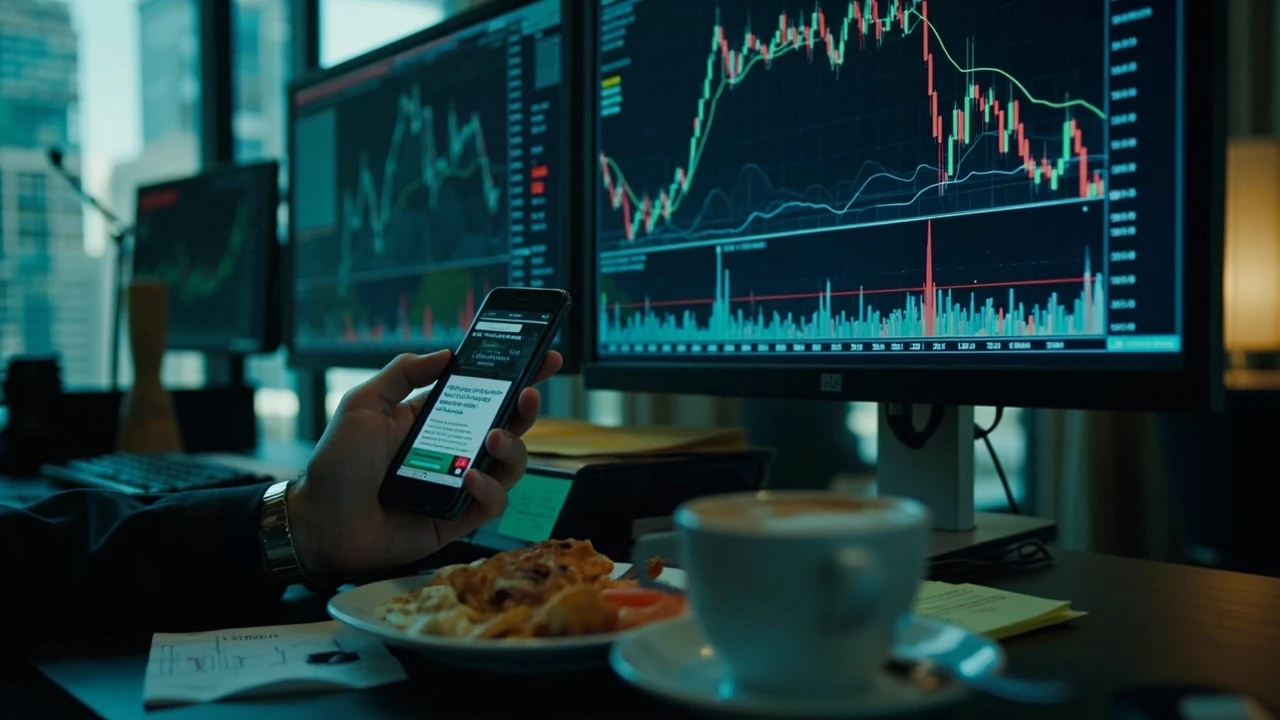
The mining stock prices reflected the pain. Between March 2025, when I snagged, and January 2026, MARA dropped from $28.40 to $14.20, a 50% decline. RIOT fell from $14.80 to $7.10. CLSK dropped from $22.60 to $11.30. CORZ, which I held the least confidence in, somehow held up best at a 38% decline from $18.20 to $11.30. My $18,000 position was worth $9,480 by late January 2026. A loss of $8,520. I dug into the quarterly reports tryin to find a silver lining and found nothing but red ink an declining margins.
the hash rate that kept climbing despite everything
The most confusing part of the post-halving picture was that Bitcoin's hash rate actually maintained rising thru 2025, even as miner earnings were collapsing. New-generation ASIC miners from Bitmain and MicroBT were so much more efficient than their predecessors that total network compute power persisted scaling upward. This meant the difficulty adjustment, which was sposed to help surviving miners by reducing competition, rarely provided the relief the market anticipated. More efficient machines just crowded out older ones faster.
the bankruptcy that spooked everyone
The real gut punch came on December 12, 2025, when Iris Energy, an Australian-listed Bitcoin miner with operations in Texas, announced they were restructuring $320 million in convertible notes after failing to meet debt covenants. The company's stock dropped 44% in a single day on the ASX. The ripple effect hit U.S.-listed miners immediately cuz investors grasped that if a company with Iris Energy's relatively low-cost operations was in trouble, the weaker players were likely in worse shape.
Three slight miners filed for Chapter 11 bankruptcy in January 2026: Compute North, which had already been thru restructuring once, a company called Stronghold Digital Mining that operated waste coal-powered plants in Pennsylvania, and a slight operation called Argo Blockchain that couldnt renegotiate its hosting agreements with Core Scientific. The bankruptcies flooded the market with used mining hardware at fire-sale prices, which further compressed margins for surviving miners who needed to sell Bitcoin just to cover operating costs.
I clicked thru the bankruptcy filings on the PACER court system one evening in January, reading the Chapter 11 petitions and creditor schedules. The debt structures were staggering. Some of these companies had taken on debt at 12-14% interest rates to buy mining machines that were now worth 60% less cuz of the hash rate glut. The capital gains implications of selling my mining stocks at a loss provided a slight tax benefit, but the emotional damage of watching my thesis collapse in real time was harder to shake.
what I got wrong and what I wish I'd known
My error was straightforward. I assumed the halving would benefit surviving miners through market share consolidation, which was correct in theory. What I missed was the timeline. The consolidation takes 12 to 18 months, not 6. During that transition period, earnings collapse and stock prices reflect the pain fore they reflect the gain. I needed to be patient thru a brutal earnings trough that I hadn't budgeted for emotionally or financially.
I also underestimated the impact of debt. Many mining companies had loaded up on cheap debt during the 2021 bull market to expand operations. When revenue halved overnight in April 2024, they still had to service that debt with 50% less income. The weakest operators couldn't make the payments and went under. The stronger ones survived but with severely depressed earnings. The stock prices reflected this ugly middle phase.
the energy cost wildcard I overlooked
I also failed to consider how volatile energy prices would add another dimension of risk. In Texas, where most U.S. miners operate, electricity costs fluctuate with natural gas prices and grid demand. The summer of 2025 brought a brutal heat wave that pushed spot electricity prices in the ERCOT market to 12 cents per kilowatt-hour during peak hours, double what miners had budgeted for. Operations that looked profitable at 4 cents per kWh abruptly became money incinerators at 12 cents. The weather, not Bitcoin's price, delivered the final blow for some of these companies.
I sold everythin in mid-February 2026 for approximately $10,200 and rotated the remaining capital into IBIT, the BlackRock Bitcoin ETF. I clocked if I wanted Bitcoin exposure, the direct route was better than tryin to pick winners in a mining industry undergoing a violent shakeout. The ETF was simpler, cheaper, and didn't carry the idiosyncratic risk of individual company management decisions, debt structures, and power contract negotiations.
The halving trade functioned for people who snagged miners at the absolute bottom in early 2026 after the bankruptcies cleared the field. I wasn't one of those people. I snagged the narrative too early an dropped for it with eight months of watching my portfolio bleed while Bitcoin itself was doing just fine.